
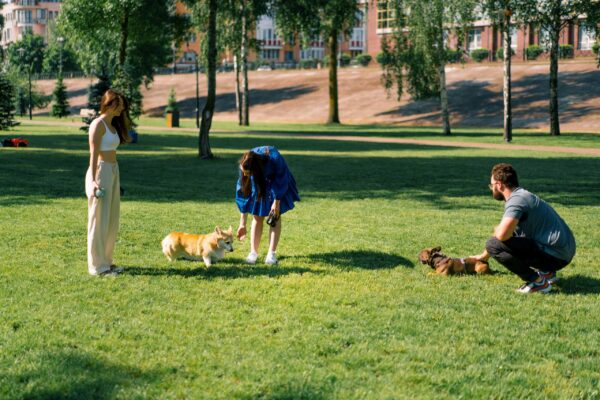
A public dog recreation space sits in the Marysville city area, built for off–leash movement and controlled animal interaction in open fenced land. The place known as Black Squirrel Bark Park gives separate zones for different dog sizes, with basic infrastructure like water access and sitting points placed near the Jackson Street zone and used by local residents for daily outdoor pet activity.
Black Squirrel Bark Park location and general structure
The area called Black Squirrel Bark Park is positioned at 711 Jackson Street in Marysville. It is designed as a fenced outdoor dog space where animals can move without a leash inside controlled boundaries. The total land size is more than three acres, divided into two separated zones. One zone is for small dogs, and another zone is for larger dogs, which reduces direct contact between different size groups.
Inside the park there is a red bridge structure at the entrance. It is used as a visual marker and transition point into the open area. The ground is open with a grass surface and walking paths created by use over time. Trees are placed in different parts of the space, giving shade during warm weather. Benches are available for visitors who stay with dogs during activity sessions.
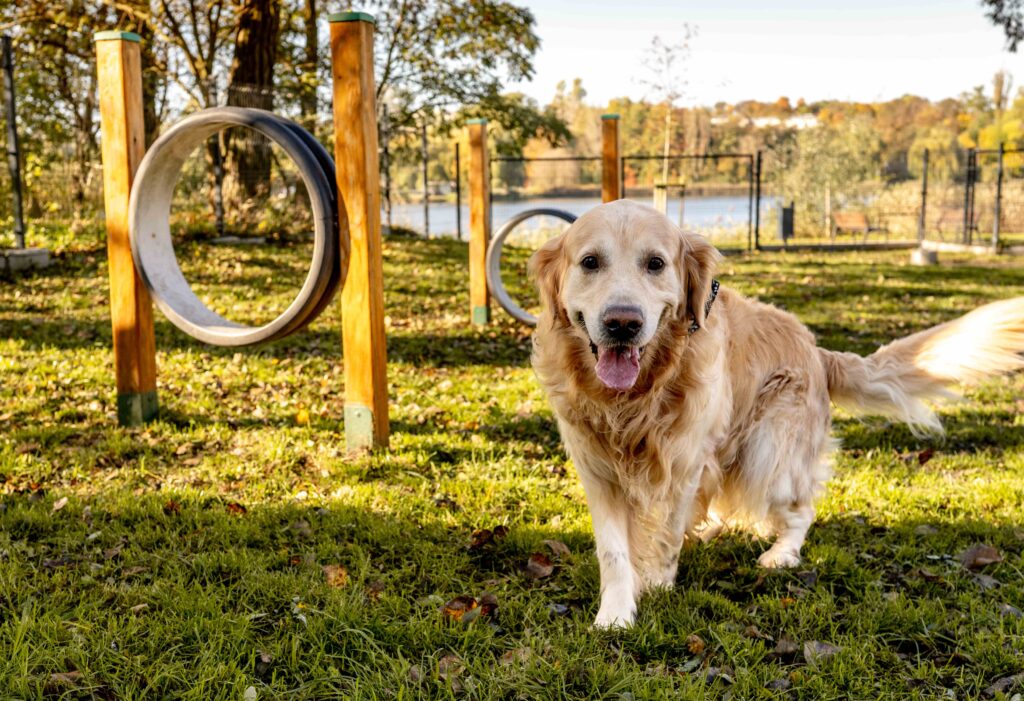
The park also contains agility equipment. These objects are used by dogs for climbing, jumping and training movement control. Shelter structures are installed for weather protection. A water fountain is installed for hydration during physical activity. The overall layout is simple, functional, and divided by fences and open visibility lines.
Black Squirrel Bark Park design and usage zones
The structure of Black Squirrel Bark Park follows a separation model. Two main fenced sections allow controlled movement and reduce stress between animals of different sizes. The entry point leads directly through the gate system into a shared open corridor before separation into zones.
The design is not complex but follows safety–oriented planning. Fences surround the full perimeter. Gates are used for controlled entry and exit. Visibility is mostly open, so supervision is possible from central points. The red bridge near the entrance also works as an orientation landmark.
Inside usage areas dogs can run freely without leashes. The surface is natural ground with grass and soil mix. Some worn paths exist from repeated movement patterns. Trees create partial shade zones not fully covering the entire area, so sun exposure is still present in open parts.
Main functional elements of the park can be described as the following:
- fenced perimeter for controlled off–leash activity
- separated zones for small and large dogs
- agility equipment for physical exercise
- benches and resting points for owners
- water fountain for hydration access
The park is structured for short– and medium–duration visits. It is not a complex sports facility but a community recreational space with a focus on animal movement and safety separation.
Facilities and environmental elements in Black Squirrel Bark Park
Facilities inside Black Squirrel Bark Park are basic but cover main needs for outdoor dog activity. A water fountain is installed in a central accessible area. It supports hydration during running and exercise. Benches are placed near observation points, usually close to fences or shaded areas.
Shelters are small structures providing protection from rain or strong sun. They are not full buildings but open roof constructions. Agility equipment includes ramps, small jumps, and balance elements. These are used informally, not as a structured training program.
Environmental conditions depend on season. In warm periods, trees provide partial shade. In cold periods, open fields become more exposed to wind. Ground condition changes after rain, sometimes becoming soft or muddy in certain zones.
Community role and local function of the park
Black Squirrel Bark Park works as a local point for dog owners in Marysville. It provides a safe space away from traffic and urban streets. Separation of large and small dogs reduces conflict risk. This structure supports a calmer environment for animals with different behavior patterns.
The park is maintained through community involvement and local support organizations. It is not an industrial facility but a community–managed recreational area. Visitors usually follow informal rules of behavior, including cleaning after pets and respecting zone separation.
Main functions of the park can be summarized as follows:
- safe off–leash exercise environment
- social interaction space for dogs
- separation of size–based groups
- basic training and agility practice
- outdoor recreation for residents and pets
Physical access and spatial orientation
Access to Black Squirrel Bark Park is direct from the street side. The entrance gate leads into a transitional zone before the main fenced areas. The red bridge structure acts as a visual entry signal. Paths inside are not strictly paved but formed naturally.
The park layout supports easy orientation. Even without detailed signage, separation fence lines make navigation simple. The water fountain and benches act as reference points inside the space.
Visitors usually enter, move into a designated zone, and stay within a fenced boundary until exit. The movement pattern is simple and repetitive due to the open design.
Environmental and structural overview
The park environment is semi–natural with managed intervention. Grass grows naturally, trees are planted in selected positions, and agility equipment is installed in fixed locations. No heavy infrastructure exists, so visual appearance remains open and minimal.
Structural elements include fencing, gates, bridges, benches, water fountains, and shelters. Each element has a functional role not a decorative purpose. The overall composition is practical, focused on animal safety and usability.
Weather influence is strong because of open field design. Wind, sun, and rain directly affect ground and usability conditions. Drainage is natural, without complex systems, so after heavy rain some temporary wet zones appear.
Comments are closed